
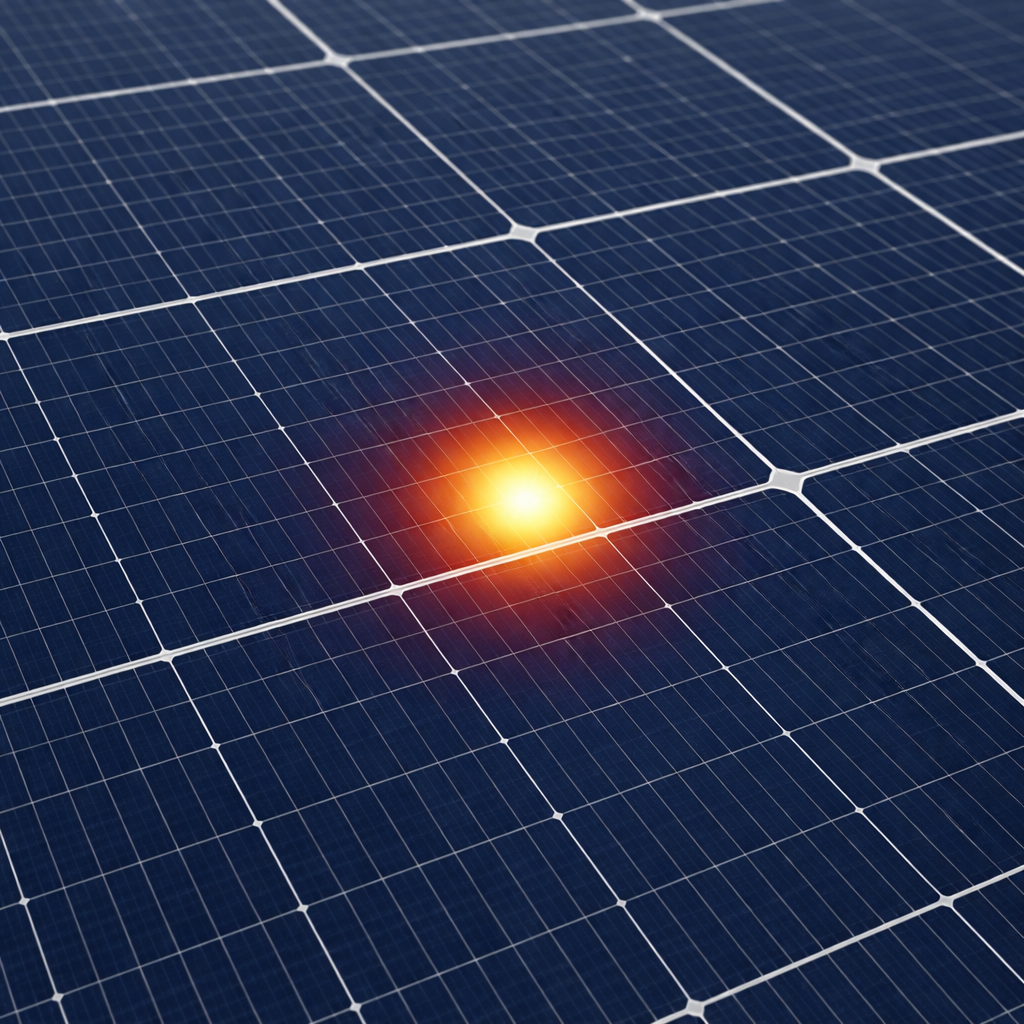
⚠ What are hotspots on solar panels – and how can you protect yourself effectively?
Hotspots solar system solar panels overheating yield loss photovoltaics photovoltaic fire safety
Solar systems can do more than generate green energy – they also involve risks that are often recognized too late. One of the most common yet least discussed issues: so-called hotspots. These invisible energy thieves are caused by localized overheating of individual cells – and can significantly reduce your PV system’s performance. In this article, you’ll learn everything you need to know about causes, risks, and modern protective measures.
Hotspots on PV modules – an invisible yield killer
Hotspots develop gradually – often unnoticed for years. They occur when individual solar cells are impaired by shade, dirt, or material defects. Instead of producing electricity, they act like small heating plates within the module. The result: energy losses, premature wear, and in the worst case even fires.
❓ Why do hotspots occur? The three main causes
- Shading & soiling
Typical causes include:- Roof structures (chimneys, vents, satellite dishes)
- Shading trees or neighboring buildings
- Bird droppings, leaves, dust, and pollen
- Critical module design
In older module types with long current paths, even a small cell defect can trigger a hotspot. Modern technologies such as half-cut cells, multi-busbar designs, or rear-contact technology (IBC) offer significantly better protection. - Planning & maintenance issues
Unconsidered shading sources, missing cleaning cycles, or insufficient inspections increase the risk. Especially on roofs with limited space, hotspots are almost inevitable if the system is not planned professionally.
✅ How to protect your PV system effectively from hotspots
- ✔️ Choose the right solar modules, with
- Half-cut or triple-cut technology
- Multi-busbar conductors for shorter current paths
- IBC cells (rear-contact technology)
- Double-glass modules for extra protection in reflective environments
- ✔️ Smart module layout
- Keep distance from shading sources (at least 30–50 cm)
- Prefer low-shade orientations
- Deliberately omit individual modules in critical areas
- ✔️ Take ongoing maintenance seriously
- Regular module cleaning
- Thermography or EL inspections for early detection
- Integrate leaf and bird protection systems
- Optimize drainage to prevent dirt buildup
☀ Risk identified – danger prevented!
Hotspots are more than a technical nuisance – they represent a serious safety risk. But with thoughtful planning, modern technology, and continuous maintenance, the problem can be effectively controlled.
We’ll be happy to support you in planning your PV system to keep the risk of hotspots as low as possible. Please contact us via our contact form, email, by phone at +49 8726 910037, or submit a non-binding quote request.