We have a new online shop!
If something in our new shop does not work or is missing, we would greatly appreciate your feedback. Please contact us via our contact form or give us a call:
+49 8726 910037
×
+49 8726910037
  • Service

EV Chargers

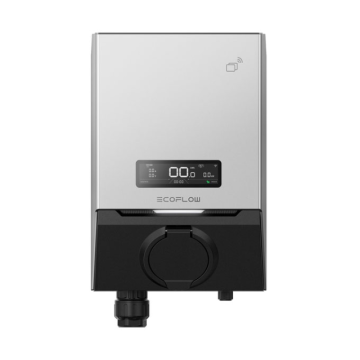
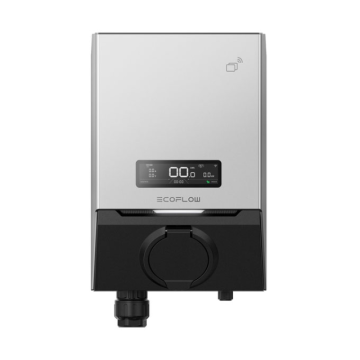
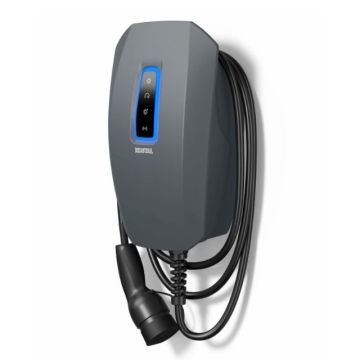
Here you will find an overview of various charging stations from well-known manufacturers. In our selection guide you will find information about what points you need to pay attention to when making your selection. By integrating the photovoltaic system, you increase your own consumption and reduce electricity costs.

Charging Stations / Wallboxes

Charge EVs with solar power and grid electricity
Charging with PV power
Selection guide for your needs

Introduction to charging stations

Switching to an electric car is a big step—and it also means choosing the right home charger, often referred to as a wallbox. But what exactly is a wallbox, and what should you look for when buying one?

What is a wallbox, exactly?

A wallbox is a charging station for your EV that’s mounted on a wall—for example in your garage, on a carport, or on an exterior wall. It charges your car faster, safer, and more reliably than a standard household socket. A normal socket isn’t designed to deliver high power for many hours at a time. A wallbox, on the other hand, includes:

  • Protection mechanisms against overheating
  • Residual current (fault current) detection
  • Depending on the model, even intelligent load management

How fast does a wallbox charge a car?

The charging power (measured in kilowatts, kW) determines how quickly your car is charged.

  • 11 kW is the standard in Germany
  • 22 kW charges about twice as fast—but you’ll need approval from your grid operator.
    Tip: For most households, an 11 kW wallbox is completely sufficient.

Charging time for an EV with a 60 kWh battery (from empty):

Charging source Charging power Charging time (100%) Charging time (approx. 80%)
Household socket (230 V, 10 A) approx. 2.3 kW ≈ 26 hours ≈ 21 hours
Wallbox (11 kW, three-phase) 11 kW ≈ 5.5 hours ≈ 4.5 hours
Wallbox (22 kW, three-phase) 22 kW ≈ 2.7 hours ≈ 2.2 hours

Can a PV solar power system be integrated?

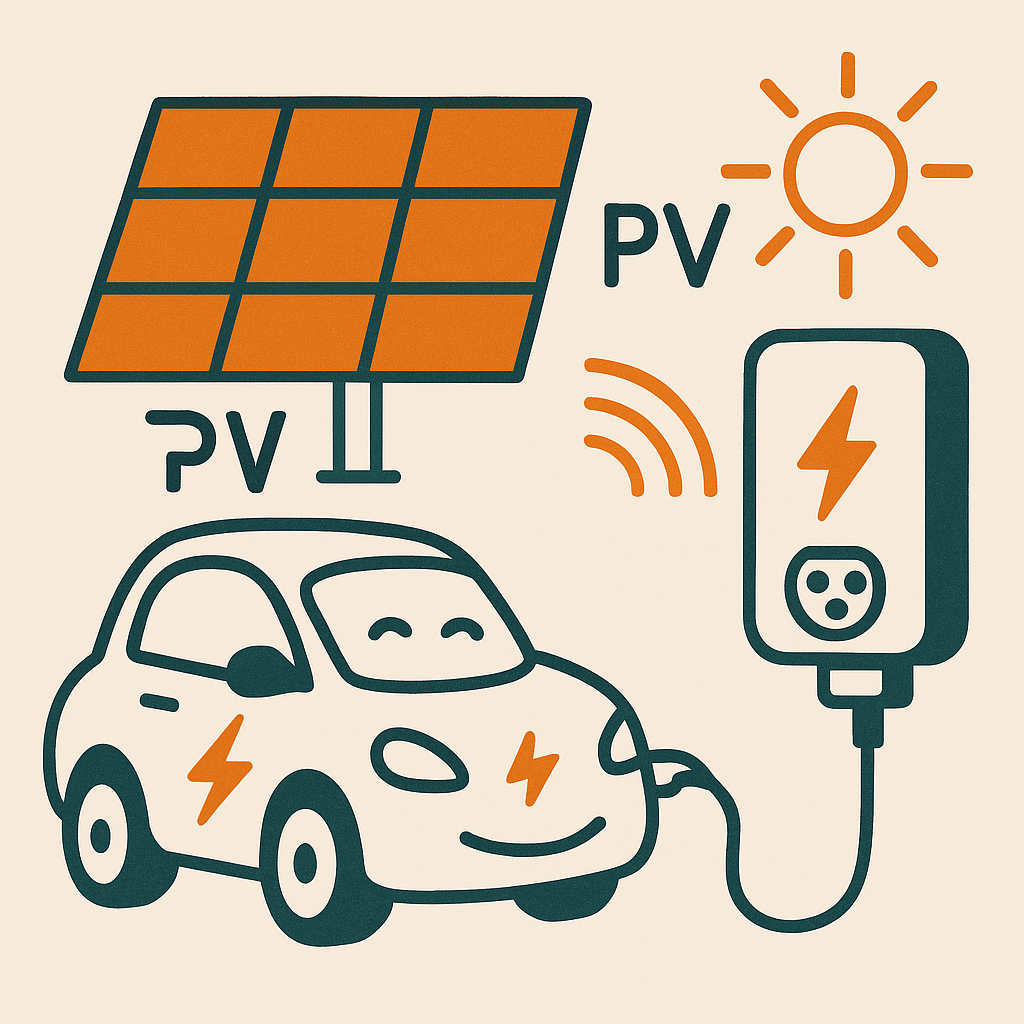
If you have a PV system on your roof and an EV in the driveway, you’ll ideally want to connect the two. Because what could be better than charging your car with self-generated solar power? In principle, it’s quite simple: the PV system generates electricity, which is fed into your home’s electrical system via the inverter. A compatible wallbox detects when enough PV surplus is available and then automatically starts charging.

For this, you need three things:

  • A PV system with an inverter
  • A “smart” wallbox that supports PV surplus charging
  • An energy management system or direct communication between the wallbox and the inverter

What else should you keep in mind?

Wallboxes offer many additional options, such as:

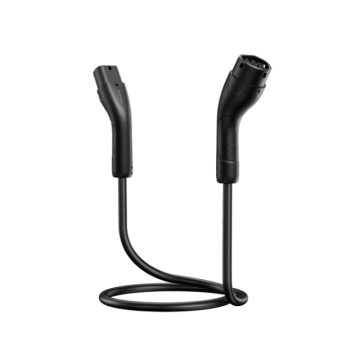
  • Fixed (tethered) charging cable or a socket version?
  • Cable length – 5 m or better 7.5 m?
  • Locking function or access control – e.g., via RFID tag
  • Full control via app – many systems can now be conveniently managed via an app:
    • Set charging schedules (e.g., only between 10 am and 5 pm)
    • Set a minimum charge level (e.g., for spontaneous trips)
    • View statistics (e.g., how much solar power was used for charging)

What costs should you expect?

Depending on the features, wallboxes usually cost between €500 and €1,200. In addition, there are the electrician’s installation costs, which depend on the scope of work. Some wallboxes require a dedicated RCD (residual current device), while others already have this protection built in.

Conclusion: Fueling up with sunshine has never been easier

Connecting your PV system to a wallbox isn’t rocket science. With the right technology and a bit of planning, you can charge your EV conveniently, affordably, and climate-friendly at home—and become much less dependent on electricity prices.

  • You use your own electricity directly instead of feeding it into the grid for a low tariff
  • In the best case, you drive almost for free
  • You reduce strain on the power grid and help protect the environment
  • And: you increase the self-consumption of your PV system—making it even more economical

Personal Consultation

Wondering how to best align your EV charging and PV system with your own energy demand? If you have any questions about your planning or specific product features, we’ll be happy to advise you. Simply fill out our contact form or give us a call.

All information is provided without guarantee.